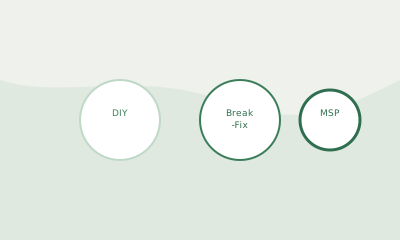
The three models
Most small businesses fall into one of three IT support models, often without having deliberately chosen one:
DIY (do it yourself): The business owner or a technically inclined employee handles IT issues as they arise. Common in very small businesses where the cost of outside support feels unjustifiable.
Break-fix: Call an IT consultant or repair shop when something breaks. Pay hourly. No ongoing relationship.
Managed service provider (MSP): Pay a monthly fee for ongoing IT management — monitoring, maintenance, help desk support, and proactive issue resolution.
When each model makes sense
DIY is appropriate when:
- You have fewer than 5 employees
- Your IT consists of a few laptops, cloud software, and Wi-Fi
- You have genuine technical confidence handling the basics
- The cost of an IT problem is low relative to the cost of a support contract
The risk: DIY often means deferred maintenance (skipped updates, no backups, unreviewed security) that accumulates into larger problems over time.
Break-fix is appropriate when:
- You have 5–15 employees and relatively simple, stable IT
- Your IT problems are infrequent (a few times per year)
- You don’t need guaranteed response times
- You want to control costs and pay only for what you use
The risk: break-fix provides no proactive monitoring, so problems often escalate before they’re caught. Hourly rates run $100–200/hour for competent support.
MSP is appropriate when:
- You have 10+ employees or critical IT infrastructure
- Downtime would meaningfully impact revenue
- You need guaranteed response times (SLA)
- You want someone proactively monitoring your systems
MSP costs typically run $75–150 per user per month for comprehensive coverage. This feels expensive until you calculate what an unmanaged outage costs in lost productivity.
Finding good IT support
For break-fix and MSPs, ask for references from businesses your size in your industry. Ask specifically: how fast do they respond when something is down? What does their support process look like? Have they ever let a client down, and what happened?